The Field of Plenty by Luke Beling


I first met Luke in a college computer lab. He’d brought a guitar and was listening to songs with his fellow South African, Mark and plucking strings. When one or the other of them had a song they thought was better than whatever was playing, they’d call out “yield,” and switch. Then we started playing songs on the guitar, with Luke asking me what songs I liked and what songs I could play. I didn’t think much about his questions at the time and we landed on Cat Stevens’ Moonshadow as the greatest song either of us could play from memory.

I came to understand that no one asked more questions than Luke and that he was genuinely interested in the world and in people. He wanted to know. But the questions weren’t just for him. Luke’s questions were a way of helping the people he talked to understand themselves.

And Luke asks the right questions. He asks questions about what drives you, where your head is, where you’ve been and where you’re going. But then sometimes when Luke asks a question to you, you realize that the most vital thing is that you’ve got a question to answer and a friend that cares to listen. Sometimes the question doesn’t have to be meaningful. It can just be, what songs can you play? And that opens a whole world.

Luke’s The Field of Plenty is a book of questions. When a young man, Mitchell, with a future in football loses his father, he loses touch with who he is. After suffering an injury and taking pills to mask physical pain, Mitchell discovers the pills can mask other kinds of pain too. The journey back to wholeness requires Mitchell to look at himself again and accept the broken parts. And simultaneously he has to look at others and accept them—like his mother who has her own substance abuse problem. Ultimately, the great question in this book is, “How do we experience a life of plenty? How do we live in fulfilment?” Like Mitchell, we all have our own answers to those questions, but they aren’t always the right ones. It takes bravery to look in a mirror and find fulfillment in what we see, all the broken parts included.

With Field of Plenty, we have Luke to thank for asking all the big questions and the small ones too.

- Transmission Complete -


The Hard Switch by Owen Pomery

The Hard Switch is easy to love. Owen Pomery's art—the landscapes, the scale, attention to detail, and spartan but central use of primary colors—is reminiscent of Moebius. Pomery is a master at telling the story visually. But where Moebius' comics were mostly a showcase for his art, containing little in the way of explanation for any of the awe-inspiring worlds filling the pages of his comics, Pomery is as much of a storyteller as he is a illustrator. In juxtaposition, his characters are drawn in a comic rather than lifelike style but the story connects us to them, filling in the details missing from their faces.

Androne - Dwain Worrell


Dwain Worrell's Androne wrestles with an American identity as military despot that few Americans care to fully consider. Worrell sets his story in desert wastelands that call to mind the battlefields that the United States has occupied since the beginning of this century—Iraq, Afghanistan, Yemen, Somalia, Pakistan, Syria. Regardless of party politics, the US is continuously at war. Worrell points the finger at ideology, arguing that the US guarantees its own survival by not allowing non-Western ideologies to survive. Of course, it isn't every non-Western ideology that gets run through the grinder of the USAmerican military-industrial complex. Foremost, forever wars have been waged to put terrorism in check and to ensure that US interests are maintained, whether that involves keeping various foreign states from expanding their influence, ensuring that the US controls specific resources, and maintaining a military presence in key regions. The justification for war over the past century has been Woodrow Wilson's WW1 rallying cry to "Make for world safe for democracy," a rallying cry echoed in Joe Biden's assertion that we are in a "battle for democracy."

Gundog: A Review

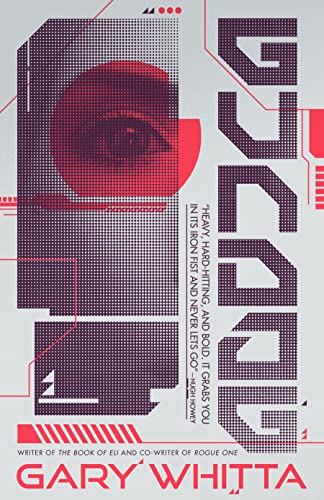
Gary Whitta's Gundog follows Dakota (why couldn't it have been Yoshimi?!) as she escapes a work prison run by the Mek, a hostile alien race of robots. She follows a cryptic map once tattooed on her brother's now missing arm and also tattooed on the arm of a drifter named Falk that shows up in the prison camp. The robotic Mek don't really have any reason to keep the humans around other than perhaps as some kind of trophy. Whitta doesn't give us much to go on about the Mek, other than that they are cruel, advanced, and in the habit of taking over planets. They are easy to loathe and, really, they are cannon fodder. 

Dakota's mother, Rosie, was a Gundog gunner, and a fairly good one, we're told, making her last stand at the Battle of Bismarck and dying with her 'dog. The Gundog is a nod, nearly in name as well, to Gundam Wing. Similar to the wings, the Gundog is a mech piloted by humans with lots of guns (but no dogs). 

Dakota follows the map and finds an AI facsimile of Rosie who has created a bigger, badder Gundog. Dakota, along with a diffident engineering genius named Runyon with an eidetic memory train to run the 'dog and then set out on a big 'ole vengeance tour. Dakota is hell bent on not shooting 'til she sees the whites of the Mek's eyes, which gets her and Runyon in a lot of trouble, as the Mek are tough and like to call in their position to legions of other Mek.

Artificial Intelligence: Ubiquitous Entertainment or the Doom to Come?

Ryan Hyatt’s Enhanced: A Hollywood Murder Mystery is a preview of our future relationship with our phones and, by extension, all of society. The tele- of telephone—meaning distant—has something of a dark promise to it. Yes, we initially used telephones to talk to those distant from us, but these devices are now putting distance between ourselves and the people closest to us. The world that Ryan presents in Enhanced walks the line between creating a dangerous distance and breaking down the distance between us and the world beyond. The hope, of course, is that technology would make everything better. And, yeah, sometimes it does. Hyatt prophesies a world where personality constructs befriend the users that carry them around on their phones, providing everything from the Alexa-like help we’ve come to expect from our phones to more nuanced conversations and finally as important figures that we will come to rely on for our social existence.

A review of Inertia, Mark Everglade's sequel to Hemispheres


“Capitalism has made us think of everything as a resource to be exploited, but nature is not a resource, and it aches as it suffers. Everything in your environment changes how you come out as a person, so take care of your world.” - from Inertia

Inertia is Mark Everglade’s sequel to Hemispheres. We return to Evig Natt and Dayburn and find that not everyone is happy with a world where everyone experiences day and night, and for good reason. The new cycle has messed with the rhythms of life. Cultures and economies reflect the patterns in a region. But in Gliese 581g, where the planet’s rotation is changed after generations, this has radically altered life, and not everyone wants the alteration. On the night side, light was once a form of currency but that system is now thrown in disarray, a way of life is lost.


Inertia follows Severum Rivenshear as he tries to reconnect with his family and stop a plan to mess up the planet’s rotation, causing a public outcry due to instability and environmental disaster, resulting in a call to once again lock the planet’s rotation. Severum is not the young man he once was. Now he relies on the wisdom borne of experience as well as a variety of mods and a titanium hand. But he is better for his age. The younger Severum would not have listened to his daughter. He wouldn’t have tried to make peace. The loss of a hand puts him in the company of Allen Limmit from K. W. Jeter’s Dr. Adder, who has a flashglove installed in place of a hand, a dangerous weapon, and Star Wars’ Luke Skywalker, who becomes more like his father, Darth Vader, once the hand Vader sliced off is replaced with a prosthetic hand. The grab for power in these texts results in a loss of power. But the prosthetic replacement marks an increase in power that symbolizes the gaining of wisdom.


"His Scars are America's Scars": An Interview with Christopher Brown

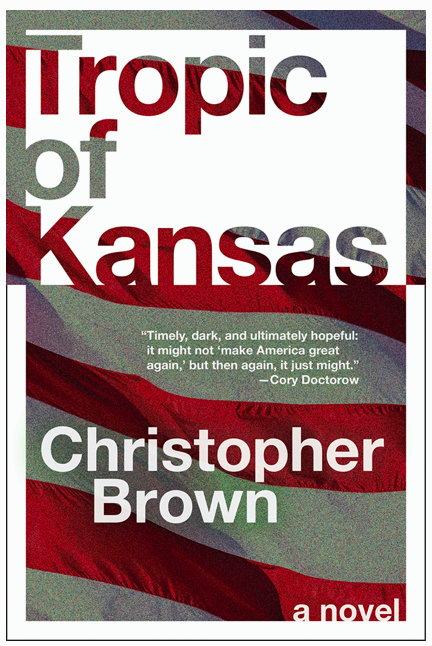
the cover of Tropic of Kansas has a muted American flag

Christopher Brown is emerging as one of the hardest hitting voices in science fiction. His stories pack a sense urgency, considering anti-democratic movements, social justice, economic inequality, climate change. Brown is the master of leading us to an image, an inverted moment that resonates, even haunts us until we understand the message.

Brown is a deep well of ideas and experiences. A conversation with Brown is a master class on fiction writing, political science, science fiction, futurism, and pop culture. But what comes through the most is his joy. Laughter punctuated a conversation that could also be thought of as a creative exploration of the mind of a science fiction writer, a writer at the top of his game and loving every second of it.

It seems to me like you've probably had stories in your head for years. But then you broke through, and you got the amazing Tropic of Kansas published. It feels like a work that you had been developing for a decade. Can you tell me the process there?

Not quite a decade, but there were a lot of ideas that had been stewing in my brain that ended up in there. It's definitely that kind of book. Rudy Rucker reviewed it, and he made a comment about how it's one of those books where you can tell it's like everything somebody had been thinking about for a long time. Maybe that came to you critically as well. That book was sort of funny in that I was trying to put a lot of ideas to work in one coherent narrative. I originally wrote a story for an anthology that Joe Lansdale and a guy named Scott Cup edited for the World Fantasy Convention on the centennial of Robert E Howard's birthday. Robert E Howard of Conan the Barbarian fame. One of the constraints of this anthology was you were supposed to write a story featuring a Robert E Howard character or in the style of Howard, but the only rule was you couldn't use Conan because they didn't have the rights. So, I thought, I'll write a Conan story. That's what turned me on to fantastic fiction as an eleven-year-old. I wrote a story that invented this character of Sig, who was like my version of Conan, but he was an out-of-work Blackwater type guy. You know, like B-team, would-be Blackwater guy in post-9/11 Baghdad or post-invasion Baghdad. It was a fun character. It got a great response. It was sort of funny and did this kind of thing I was trying to do, like take the things great about pulp fiction, like Robert E Howard stories, and try to repurpose them towards more emancipatory ends or something like that, something with a little more political edge. I had been mostly just writing short fiction and was keen to write a novel that didn't suck, that I was happy with. As I was starting to write notes for thinking about doing something with this material, there were these #Occupy—kind of crazy quasi-revolutionary #Occupy protester types—who made a camp in this abandoned neon lighting factory across the street from where I live. And every night I'd go to sleep and all these guys were out there, like, planning the uprising, and this was early 2011 and the Arab Spring started happening. And so I had started out planning to write something that was much more like an adventure novel set in the post-9/11 real world, and realized what I really wanted to do was write a story about a popular uprising in the United States. And to do that, you really need to—things would have to be worse than they are, or at least worse than they were then. So, that's where the alternate history came from, and in the process, all this other stuff gets kind of crammed in there, whether it's the outdoorsy stuff or the Internet-based direct democracy stuff. Lots of ideas were in my head.

Interview with Saad Z. Hossain: Cyber Mage


Known for his dark humor and ability to mix the fantasy and SF genres, Bangledeshi author Saad Z. Hossain's fourth novel Cyber Mage releases December 14. Saad is himself a literary cyber mage, a voice for navigating our distinctly challenging 21st-century. Now, if only people would listen.

What was your entry into Science Fiction?

Well it was the Belgariad for the first entry into SFF, but pure scifi, I think I really got into Snow Crash by Neal Stephenson, and a lot of William Gibson. I like switching between fantasy and sci fi, and often the best is when you have a mixture.

Is sci-fi popular in Bangledesh?

I think sci fi is popular amongst readers everywhere in the world, specially younger readers as an entry way into reading. I look at my own kids and often its Manga, then fantasy, then sci fi as a path into reading for pleasure.

I recently read Eric Drexler's Radical Abundance: How a Revolution in Nanotechnology Will Change Civilization and got really excited. Drexler talks about how nanotech based carbon capture really could erase the industrial revolution's carbon footprint from the earth's atmosphere. What drew your interest in nanotech for Cyber Mage?

Nanotech is already kind of driving our future technology, and I guess this will continue in a more radical way. The idea of terraforming Mars or other planets is a standard pillar of traditional SF, but if you take that idea to a ruined earth scenario, its clear that many scientists will try to terraform earth itself.

You write SF and Fantasy. Do you find your works ever get cross pollinated, some fantasy in the science and vice versa?

For me, SF and Fantasy should be intermixed, specially urban fantasy. This makes it more interesting, it scrambles the brain looking for normal narrative patterns, and it lets you meld together myth and future tech in interesting ways. The whole point is that if you take SF far enough, it looks like fantasy, and if you break down fantasy deeply enough, it looks like science. For example when I'm writing a magic system, if my world building is on point and very detailed, it will take on a pseudo scientific tone, in the sense that all good magic systems are rigorous, and follow an internal logic or physics. Similarly, if I take any sci fi tech far enough into the future, it begins to look like magic, ie something theoretically possible but not related to anything we have right now. This idea that the two must be strictly separated comes from a specific kind of fantasy and a specific kind of sci fi: sword and sorcery type fantasy and space opera type SFF.

Speaking of science fantasy, did you watch the new Dune movie? What was your impression?

I loved it. I liked the tone, the pacing, the beautiful cinematography. I was prepared to be disappointed, and also hoping for something doomed like the Jodorowsky Dune, but this version was solid.


What's the best piece of writing advice you've ever received?

If you get stuck, read books. It works! Reading is the best way to get out of writer's block, or a plot hole, or just general malaise.

What would Americans learn about America if they were a Bangladeshi not under the constant manipulation of an America-first ideologically biased media feed?

Looking at it from the outside and I think they would notice that America, bizarrely, is the poorest rich country in the world. It seems like you could stop squandering money on the military, or corporate bailouts, and spend that on the actual people, by giving them free healthcare, education, housing. The economy as a whole would benefit and go up, it's only certain sectors like the insurance companies or the arms dealers or massive corporations that would suffer. I think people are slightly bemused that American policies continue to hurt American citizens, and they seem blind to it.

The day is yours. No one demands anything of you for 24 hours except that you have a good time. No limits. What do you do?

Luckily I do get a fair amount of free time, specially with COVID, I've been lucky enough to scale back to a two day work week, with the rest of the time on call trouble shooting. I've found that after the initial flurry of activity, it slowly distilled down to hours on the couch playing games, while reading books, browsing the net on the laptop, and chatting on WhatsApp with my friends. I have easily spent 10-12 hours doing exactly this. Without moving.

What books are on your to-read list?

I am going through the entire Terry Pratchett book list, excluding the picture books. Right now I'm on Reaper Man. I feel extremely nostalgic about Discworld and immensely sad that we won't get any more of the Night Watch or Granny.

Cat Rambo: You Sexy Thing


As a former MUD addict--I practically lived online from '95-'00, exploring the text-based virtual worlds of Dark Castle MUD--it is absolutely enthralling to find a fellow MUD player writing and publishing stories. Cat Rambo is an SF and Fantasy writer, a writing teacher, a former editor of Fantasy Magazine, and her new book You Sexy Thing is the next book you should read. 

How has your work as an editor, including your time at Fantasy Magazine, informed your writing?


Certainly editing has made me a better writer, more attentive to the nuances of comma placement and sentence structure. But it's also made the way I work with editors different, I think, or at least helped me advance more quickly to the point where I understand what a difference a good editor can make, and how awesome an ally they can be in producing something that you're really proud of. For example, I had a story in The Magazine of Fantasy and Science Fiction earlier this year, "Crazy Beautiful," that I absolutely love, and it was C.C. Finlay's excellent edits that took it to the next level, in my opinion, including a major change that involved removing the vast majority of the quotes from art critics that I'd included and leaving only the Bob Ross quote that starts it off. Similarly, with You Sexy Thing, my editor, Chris Morgan caught all sorts of little snags and played a major part in making it the smooth read that it is (I think!)

The title of your latest book, You Sexy Thing, starts off a disco inferno in my mind, with "Do you believe in miracles?" and a disco beat kicking into high gear. Is this connection incidental or do you look for ways to create parallels to pop culture a la Julia Kristeva's intertextuality?

Like everyone, I swim in a sea of pop culture daily and am so steeped in it that much of my essence is pop culture references. And it's space opera, a manifestation of pop culture, so I get to both use and play with and subvert and occasionally celebrate all sorts of things about that genre. Science fiction isn't about the future; it's our world and times seen through a particularly interesting and complicated lens, and so it's inescapable. Just some authors are better at pretending intertextuality's not there than others.

What's more frightening, your worst dreams or a world without Ursula K. Le Guin?

Definitely a world without Ursula's dreams.

What should good science fiction do in the Rohrschaching twenties?

It should splinter and challenge, cajole and perplex, while drumming its own different tune.

Video games or table-top games?

Definitely table-top. I grew up playing RPGs at the local game/book store and just last weekend, got to play Isle of Cats with some old friends at that same store.

I discovered a table top gaming store tucked around the side of a shopping plaza in my town just this week and found people gathering for Magic, the gathering. In a Meta-branded world, it’s reassuring to find people logging out and going in common spaces to share experiences with others.Do you plan and organize your stories ahead of time or just kind of go?

I used to just go, but more and more I've fallen into planning as a form of procrastinating before writing.

You're in a generation spaceship with full nanotech capable of supporting your life processes for the next two billion years, as a conservative estimate. Where do you go? What's your mission?

I'm off in search of other intelligent life, so I can hear their stories and witness their art! How cool would that be?

That's the dream! Do you listen to music while you write?

I can't listen to music and write at the same time, but I listen while I'm doing the long walk beforehand that I use for thinking about stories. Usually I try to listen to music that's thematically connected to what I'm writing, so with this book, it was a lot of video game scores, like Mass Effect.

What book, along with You Sexy Thing, should we go read right now?

Read Karen Joy Fowler's We Are All Completely Beside Ourself, but don't read any spoilers first.

The Invisible Man Is Never Invisible

Hegemony and the Subjugation of Invisible Bodies, an essay in homage to Paul Virilio.


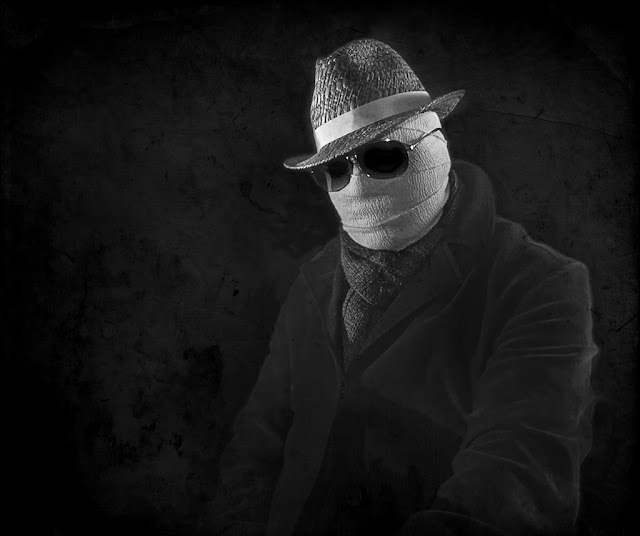
In H.G. Wells’ The Invisible Man, the eponymous scientist increases his visibility in society when he turns himself invisible. He grows bold with his invisibility, turning into a murderer and announcing a reign of terror. The invisible-visible inversion comments directly on the relationship between technological progress and society, revealing that the various practices used to control populations become ever smaller, more unseen, while simultaneously becoming more efficient, more total.

The United States is fully in the era of endo-colonization, in which the government subjects its own citizens to the disciplinary measures that were once practiced on colonial populations or in warzones. The United States practiced disciplinary techniques over a century ago in the Philippines, a half century ago in Vietnam, and in Middle Eastern forever wars it created for itself after 911. But now helicopters fly low over American city streets, swooping citizens in displays of might worthy of Hollywood’s Die Hard (1988) in which FBI agents launch a helicopter attack on a supposed terrorist atop the Nakatomi Building. In cities across America, unmarked agents swarm protestors, pull them into unmarked vans, putting them through hours of questions and intimidation. On United States soil, the government has continued to refine and employ military techniques, deterrence techniques, surveillance, and disciplinary techniques, largely through the Homeland Security Administration.

In Pure War, Paul Virilio asserts that America, a power with no designated enemy, is threatened by its own supremacy. Yes, the United States has been in several forever wars, beginning after the World Trade Centers were hit by passenger airplanes, but these are not wars America has to wage. These are wars that the government chooses to continually wage for its own benefit. Maintaining ongoing wars is a way to increase patriotism and simultaneously decrease dissent. Ongoing wars provide a perpetual boost to the economy. The US discovered the benefit of the war economy during WWII when supplying the war machine effectively ended the depression and the leaps in research and development, specifically the nuclear capabilities as a result of the Manhattan project, positioned the country as a military superpower, meaning, of course, that the US was now able to influence politics across the globe in pursuit of securing economic interests. Continuing military interventions ensure that R&D spending results in maintaining a tactical military advantage over other world powers.

Science Fiction Writers on SciFi


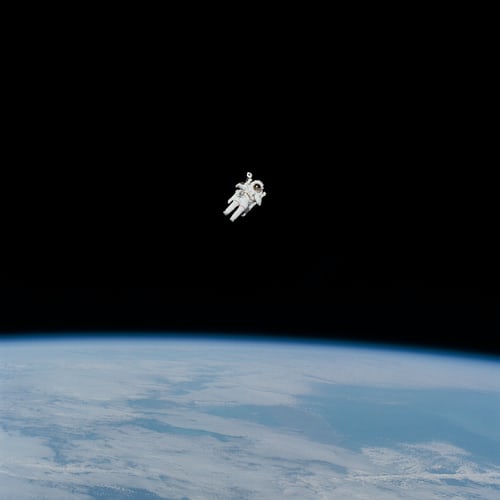
NASA spacewalk

What’s my favorite thing about science fiction? Well, the overdosed, flatlined
cyberpunk fiction of Bruce Sterling and William Gibson is up there. But when
I think about the future of the genre, I think of a whole starfield of space to survey.
I think of the opportunity to adventure into my imagination to make worlds, ex nihilo.

And, man, I’ve been doing a lot of that lately. Driving to Bowling Green, Kentucky to teach composition and literature at WKU has afforded me 14 voice-to-text dictation hours a week of pure creative exploration with a dash of flawed dictation. (Max Cold gets transposed to Mac’s Called, Mask Colt, and even weirder stuff). 

But as I’ve been writing SF, I’ve had the good fortune to meet some stellar writers 
along the way. Knowing them and seeing the creative worlds that they pen has climbed to the top of my list of what I like about the genre. Because the genre is people, really freaking amazing people who have important things to say, beautiful things to say, or sometimes horrifying things, and genius thoughts, and images like crystalline winter webwork phasing in and out of dreams.

So, this post is both to and by my fellow SF writing friends who are exploring the genre, pushing its limits, filling empty space, and as Ryan Hyatt says, wonderizing us.

Ancillary Justice - Annie Leckie: Award Justice is Ancillary to, uh, Who Knows?


So, I hate this book. I originally started writing this review nearly two years ago. I was excited to read a book that won basically every award. I'm thinking, yay!, another book on the level of Neuromancer! Here's a rare book that was so good that it won all the damn awards. 

Yeah, well. The awards apparently mean nothing now. Because Ancillary Justice isn't worthy.

Hemispheres by Mark Everglade

Mark Everglade's Hemispheres offers a world of scarcity (Scar City) and plenty, a hemisphere bathed in permanent light (Dayburn) and another hemisphere shrouded in everlasting darkness (Evig Natt). This binary is one of many in Hemispheres, which explores binaries experienced by man individually and in society. Those include war and peace, order and chaos, consciousness and unconsciousness, male and female, light and dark, wealth and poverty, power and helplessness. Everglade uses his work to comment on social inequalities, like when he writes that "Cardboard cut-out shanties adorn the feet of skyscrapers" (50), an unfortunate reality in cities the world over, where the 1% live and work far above the poorest of the poor.

Interview with Dana Schoel: A Sense of Freedom!


Dana Schoel is a Montreal-based writer working in film, television, and print. He won a Canadian Screen Award for his documentary work about the Inuit and worked with Chad McQueen (son of Steve McQueen) on a Netflix biopic. His short film The Fantastic Bus is one part a poignant snapshot of childhood, full of idealism for a father, preternaturally strong and full of life, the embodiment of all authority through the eyes of his son. Fantastic Bus is also one part an adult's reckoning with the weakness of his parents, with their aging, with the knowledge that they were never perfect but were doing the best they could with what they had. Dana recently spent some time with Rapid Transmission and, for the record, Andy Weir is the SF writer, Peter Weir is the talented auteur. 

Slaughterhouse Five - Kurt Vonnegut

Like everyone else ever, I had never heard of Kurt Vonnegut until college. I took a contemporary American literature course my freshman year and a student chose to write on the book for his term paper. He linked the Tralfamadorians to Italians, arguing that the circus/zoo exhibit that the Tralfamadorians place Billy Pilgrim in is analogous to Vonnegut's captivity in Dresden. Since Italians were part of the Axis powers, the Tralfamadorians read as hostile. Pilgrim's detention is not purely for the sake of providing an interesting exhibit, it is a way to demonstrate the Tralfamadorians' superiority over an alien species--and thus it resonates with Mussolini's and Hitler's ethno-nationalistic argument for a manifesto of race and master race, respectively.

Best Science Fiction Books 101-200

Cover of Iain Banks Use of Weapons

One thing to note is that while I didn't put short story compilations in
the top 100, I've placed them in this list of the next hundred best sci-fi
titles!

Ernest Cline - Ready Player Two Review

Ready Player Two is fan-fic of '80s and '90s culture along with fan-fic of Ready Player One. The navel gazing aspect of Ready Player Two's fan-fictioning of its own universe hurts the book immeasurably. A too-big chunk of the book is spent recounting the quickly fading glory of Ready Player One (and we can surmise, the quickly fading book sales and royalty checks now that the movie fanfare has quieted). I suppose if Player Three ever gets a turn at the controls, the narrative will be so bogged down by empty nostalgia that nothing new will happen at all.

Back to the Future and Unreliable Technology


Back to the Future has an interesting commentary on technology, namely that technology is not reliable. Tech breaks and, by breaking, negatively impacts those that use it. 

Let's consider all the ways that technology is unreliable in the narrative and how it affects its users.

Cormac McCarthy - The Road

A man and boy are on the road

“You forget what you want to remember, and you remember what you want to forget.”

The post-apocalyptic landscape is bleak in Cormac McCarthy's The Road. Food is scarce, so many of the ashen faced survivors of a meteor strike that has devastated the world's ecosystems have turned to cannibalism.

The Road is about survival, identity, and care for others. The central relationship is between a father and his son. McCarthy didn't name his characters, so Man and Boy will have to suffice. 

Father and Son

McCarthy's inspiration for the book was thinking about his role as father to his son. The role of raising a child, teaching them what they need to know to not only survive but to live well, carrying traditions forward, letting go of control so that the son can mature and take on responsibility. But, McCarthy placed the time-honored tradition of raising a son in a disturbed world where survival is a battle. Living is often dependent on killing.

Review of Attack Surfaces - Cory Doctorow

Cory Doctorow's Attack Surfaces Cover

Cory Doctorow writes the books that need writing. In 2020, that's a book about police surveillance and the firms hired to bootstrap big scary surveillance tech on the backs of militarized police forces, forces that were scary long before they could track the movement and communications of citizens. But Doctorow doesn't just pull back the cover on scary tech and the firms that operationalize it. He counterbalances the acceleration of surveillance and control with democratic resistance. Doctorow's heroes stand up to power and keep standing up to power until that power stands down.